DubOS · Production platform

Production platform for dubbing studios.

A single platform that connects voice talents, project managers and sound engineers around the work itself: series, episodes, lines, deliveries. Built for studios producing dubbing with human voice at scale — microdramas, novelas, series, films.

Built from inside the industry DubOS isn't a generic project management tool retrofitted for dubbing. It was built from inside the industry — by someone who saw exactly where dubbing production breaks, and designed each feature around those breaks.

See it in action

Watch DubOS in real production.

A walkthrough of the platform: from script upload to recording, assembly, and engineer handoff.

The problem

Dubbing production is run on spreadsheets and chats. It breaks at scale.

01

Coordination scattered across Drive, Gmail, spreadsheets and chats — with no link between them.

02

Lines that get lost, misassigned, or recorded twice. No one is sure what's been delivered.

03

No real visibility on progress without asking PMs and VTs for manual updates every day.

04

Voice talents wasting time on audio software instead of acting. Engineers wasting hours on session setup.

How it works

From script to final mix, end to end.

The PM uploads scripts as CSV. DubOS generates the casting, assigns lines, and opens the system to the voice talents.

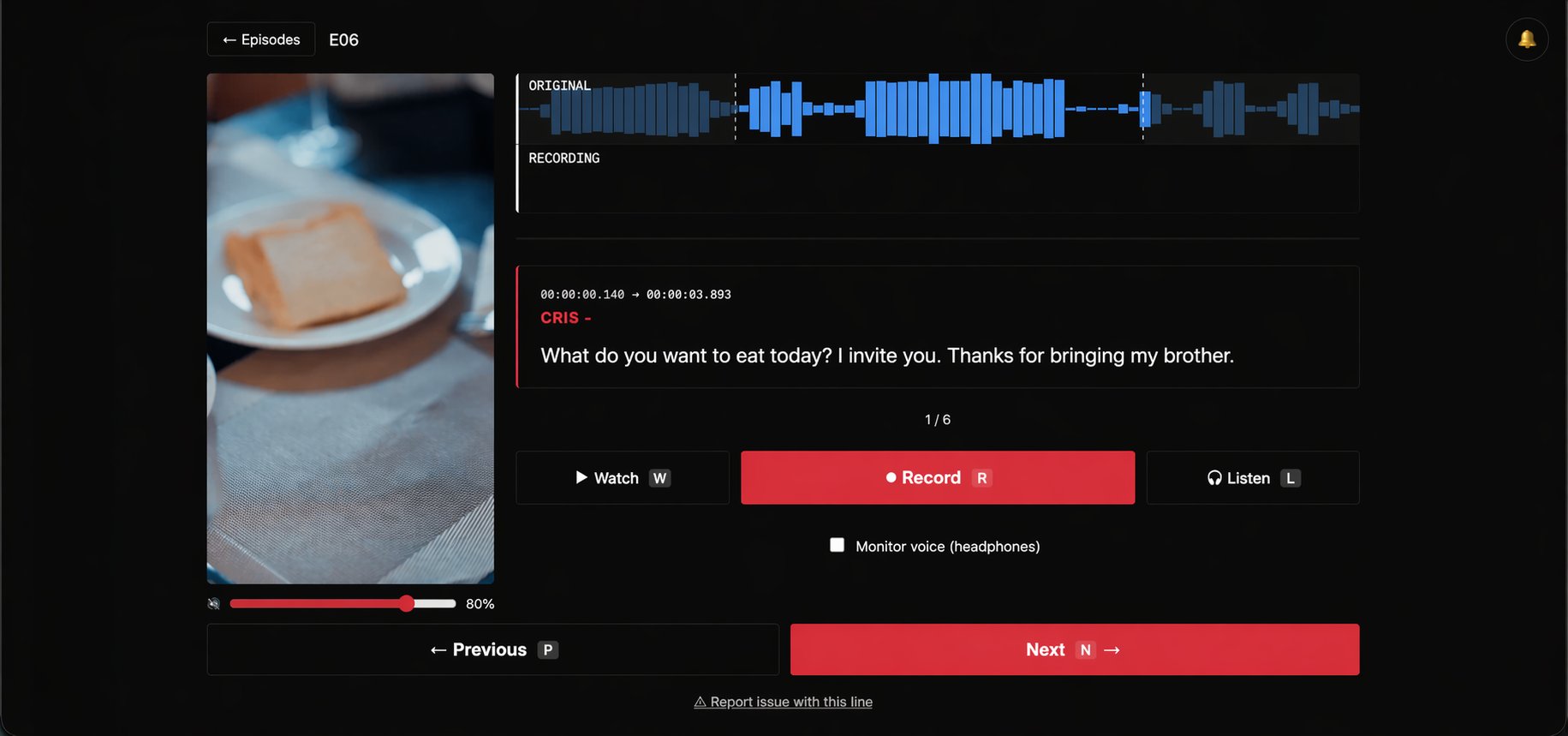
The VT enters from the browser, records line by line while watching the video and the original waveform. When the episode ends, DubOS assembles the takes into a single WAV with exact timecodes and uploads it to Drive.

The sound engineer runs an automation that downloads the entire series and sets up the Reaper session with tracks, markers and preconfigured effects. Hours of setup turn into minutes.

Every step traced end to end: every line has an author, date, file, and status.
PMupload script (CSV)
DubOSgenerate casting
VTrecord in browser
DubOSassemble WAV
DubOSupload to Drive
SEauto Reaper session
PMdeliver
Inside the platform

Real visibility, at every level.

Production dashboard
Admin · PM

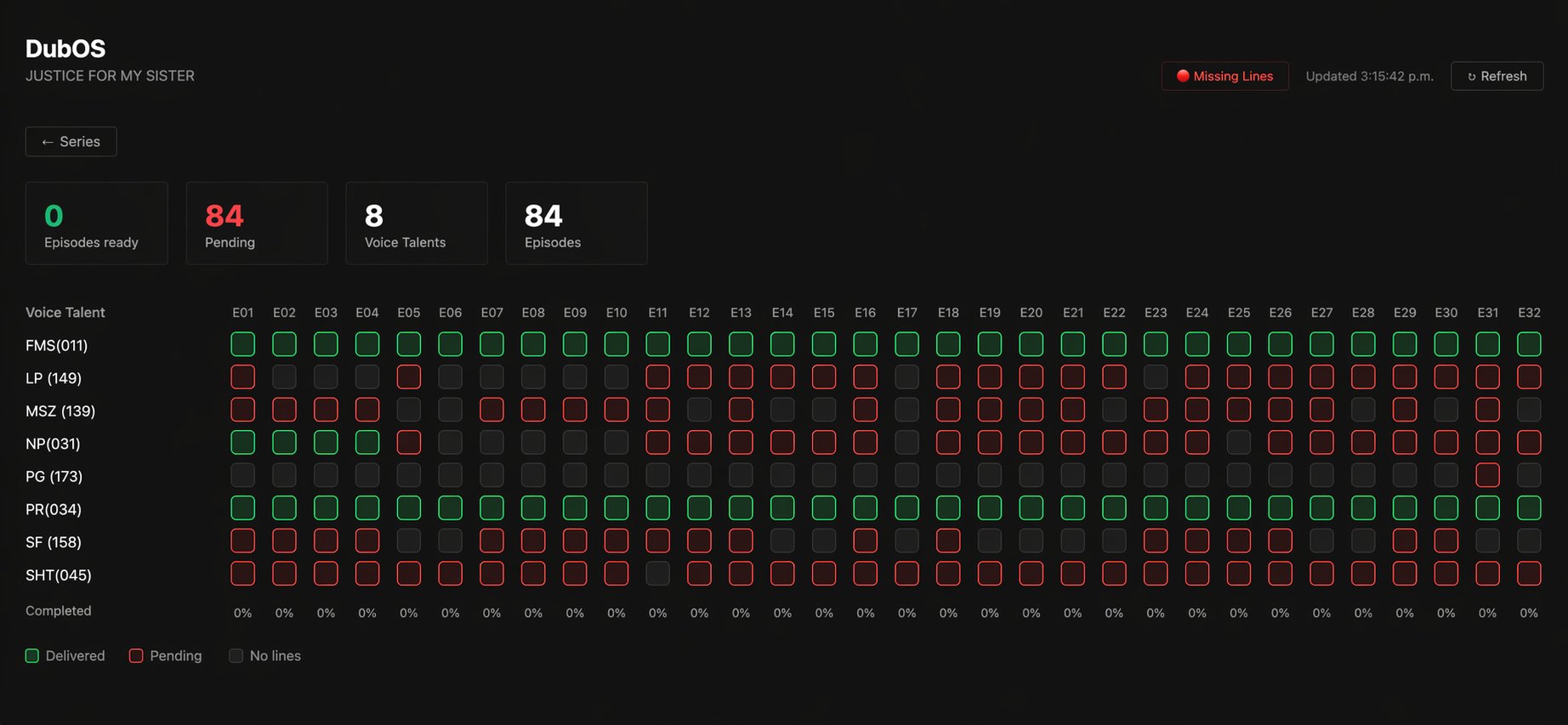
Voice Talent × episode grid. Green if delivered, red if missing. Updated in real time. No reports needed.

DubOS production dashboard showing a Voice Talent by episode grid
Recording screen
Voice Talent

Video, reference waveform, text and controls. Keyboard shortcuts. No installation, no exporting, no naming files.

DubOS recording screen showing video, waveform and recording controls
What changes by role

Designed for the people who actually do the work.

For the studio

  • Real visibilityStatus of every series, episode and VT always up to date.
  • TraceabilityEvery line has an author, recording date and associated file.
  • ScalabilityAdding series or VTs doesn't double the operational complexity.
  • Standardized filesConsistent names, folders and formats for the engineer.
  • Role-based notificationsEvery actor gets instant alerts when something involves them. No more chasing updates.

For the Voice Talent

  • No installationEverything runs in the browser. Set the audio input and done.
  • Visual referenceVideo and the original waveform stay visible while recording.
  • One-click deliveryAssembly and upload to Drive happen automatically.

For the engineer

  • One file per episodeClean timecodes and standardized names, ready for the session.
  • Automatic sessionReaper opens with video, VT tracks, markers and effects preconfigured.
  • Predictable structureOne folder per series, a subfolder per VT. Always the same.
Who's behind it
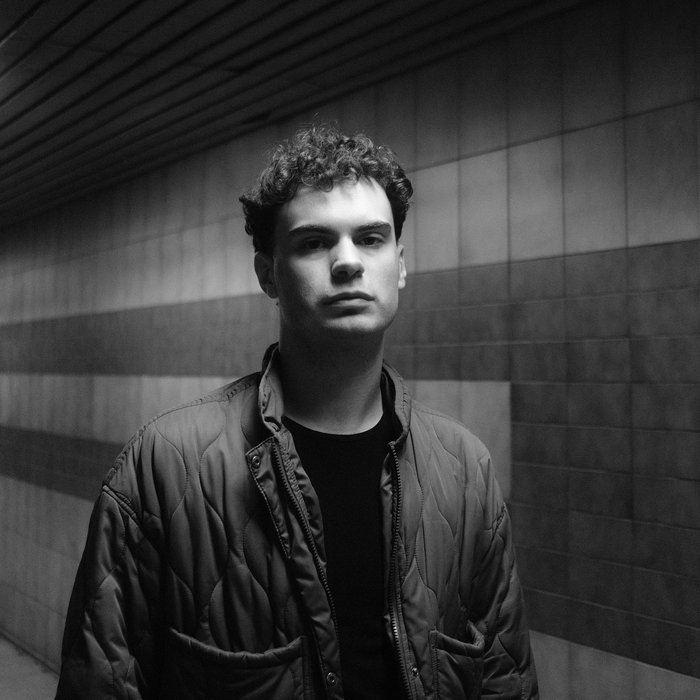
Ignacio Urbiztondo
Ignacio Urbiztondo · Sound engineer

For more than 5 years I've been working in the audiovisual industry, in dubbing productions of microdramas and series — on the sound side, but watching all the logistics up close.

The spreadsheets that break. The badly named audio files. The PMs coordinating VTs over chat. The Reaper sessions built by hand for hours.

DubOS is the answer to those problems. These aren't features thought up in the abstract: the missing-lines workflow, the automatic assembly, the VT × episode grid, the role-based notifications — all of it exists because I saw where production breaks.

If your studio produces dubbing at volume,
let's talk.

I'll show you the platform running with a real series. Demo takes about 30 minutes.